They weigh less than a bar of soap, yet carry the force of a revolution. The shoes that shattered the marathon world record aren’t just footwear — they’re engineered disruptions. When Eliud Kipchoge crossed the finish line in Vienna in 2019, completing a marathon in under two hours, the world celebrated the athlete. But it was the whisper-light shoes on his feet — barely registering on the scale — that quietly changed the game.
These aren’t your average trainers. They represent a fusion of biomechanics, materials science, and competitive ambition. And their impact isn’t limited to one race. Across major marathons, from Berlin to Boston, record after record has fallen — often with the same lightweight technology laced up and ready.
But what makes a shoe light enough to float on a soap dish, yet powerful enough to propel a runner toward history?
The Weight That Changes Everything
A standard bar of soap weighs about 100 grams. For decades, elite running shoes hovered around 220–250 grams per shoe — a load athletes carried with every stride over 42.195 kilometers. Now, the latest generation of performance racers dips below 200 grams, with some models clocking in at just 180 grams. That’s 40 grams saved per foot — the equivalent of ditching a small energy gel on every side.
Why does 40 grams matter? Because in marathon running, energy expenditure is cumulative. A 2016 study in Sports Medicine found that for every 100 grams added per shoe, runners slow by approximately 1% over long distances. Conversely, reducing weight improves running economy — the oxygen cost of maintaining a given pace.
In elite racing, where margins are measured in seconds, shaving 1% off metabolic cost can mean the difference between a personal best and a world record.
Kipchoge’s Alphafly — the shoe that carried him through sub-two — weighed approximately 188 grams in size UK 10. But more than weight, it was the integration of lightweight design with energy return that broke the mold.
How Lightness Meets Power: The Technology Inside
These ultralight shoes don’t sacrifice performance for weight savings — they amplify it. The secret lies in three interconnected innovations:
1. Pebax-Based Midsoles Traditional EVA foam has been replaced by Pebax, a thermoplastic elastomer that’s 15–20% lighter and more resilient. Unlike EVA, which compresses and loses bounce over time, Pebax retains its spring, delivering consistent energy return over tens of thousands of steps.
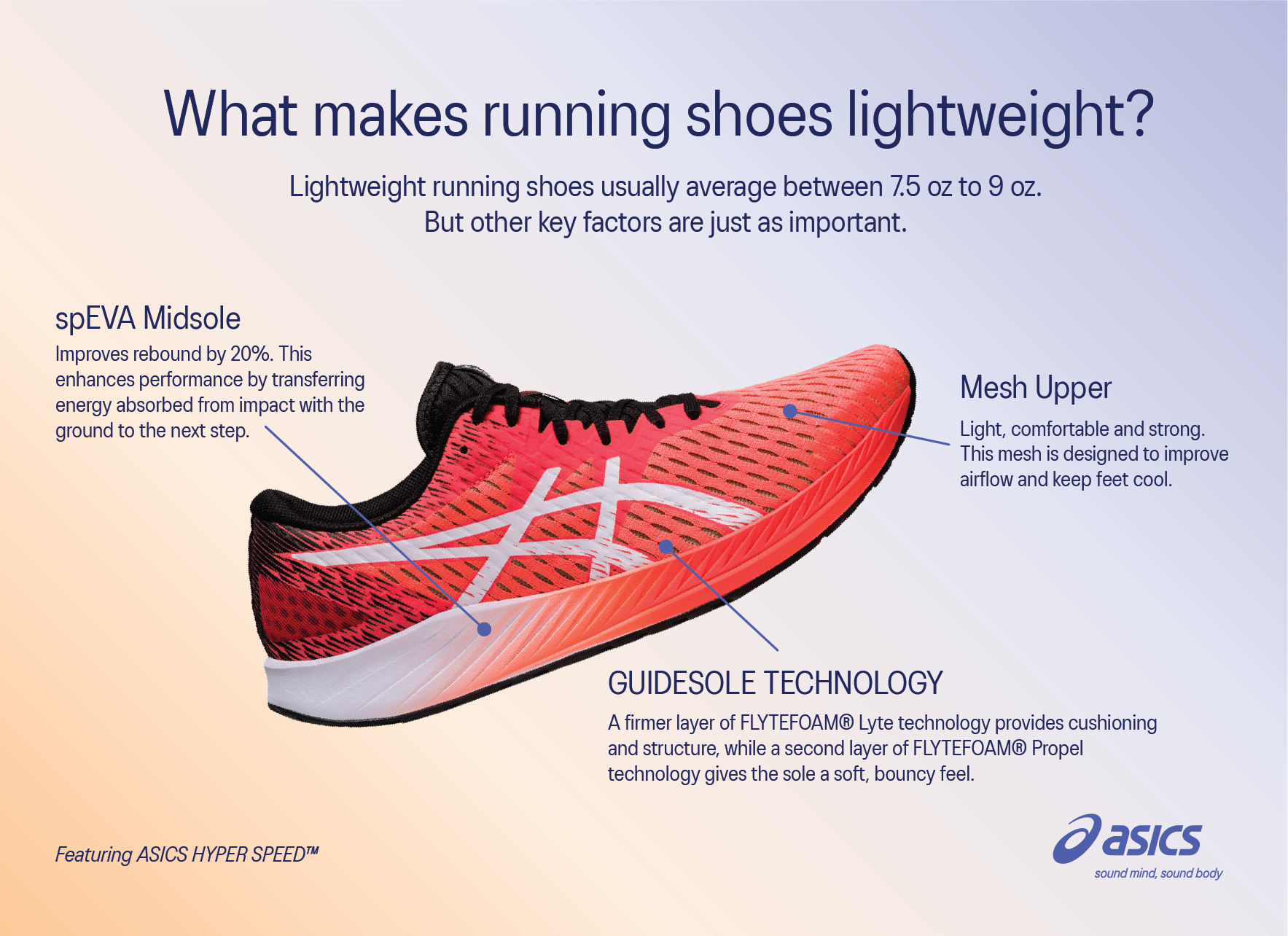
2. Full-Length Carbon Plates Rigid, curved carbon fiber plates act like leaf springs. They store energy during footstrike and release it at toe-off, reducing muscle fatigue. The plate also encourages a rolling motion, promoting a more efficient stride.
3. Strategically Placed Air Pockets Not literal balloons — but engineered voids in foam and upper materials. By removing non-essential material (especially around the heel collar and tongue), designers cut grams without compromising structural integrity.
The result? A shoe that feels almost weightless but propels forward with mechanical assistance. It’s not cheating — it’s evolution.
The Marathon Records That Fell
The impact of these lightweight racers is undeniable in the record books:
- 2018 Berlin Marathon: Eliud Kipchoge runs 2:01:39 in the Nike Vaporfly 4% — 78 seconds faster than the previous world record.
- 2022 Berlin Marathon: Kipchoge breaks his own record with 2:01:09 in the Alphafly Next% 2.
- 2023 Chicago Marathon: Kelvin Kiptum sets a new world record of 2:00:35 — again in Alphafly-s.
More than the times, it’s the pattern that’s telling. Since the Vaporfly’s debut in 2017, over 90% of elite marathoners at major races have worn some version of carbon-plated, lightweight super shoes.
And it’s not just the pros. Recreational runners report 3–5% improvements in marathon times when switching to similar models — a 10-minute gain for a 4-hour marathoner.
Why "Lighter Than a Bar of Soap" Isn't Just a Gimmick
The phrase "lighter than a bar of soap" sounds like marketing fluff — until you hold one.
Try this: Pick up a standard hotel soap bar (about 30–35 grams) and compare it to your old training shoe. Now imagine running 26.2 miles with that extra load on each foot. It’s the difference between skipping and stomping.
But weight isn’t the only factor. The perceived lightness — the lack of drag, the snappy response — enhances mental focus. Elite runners report feeling “on top of the shoe” rather than sinking into it. This psychological edge matters when racing past the 30K wall.
Still, there are trade-offs.
Limitations of Ultralight Marathon Shoes
- Durability: Most last only 100–150 miles. That’s fine for race day, but impractical as daily trainers.
- Stability: The aggressive rocker and narrow base can feel wobbly on uneven terrain.
- Cost: Priced between $250–$300, they’re inaccessible to many runners.
- Overreliance Risk: Some runners neglect strength training, assuming the shoe will do the work.
Used wisely, they’re tools — not magic.
Real Runners, Real Results: Case Studies
Case 1: Sarah, 3:45 Marathoner (Boston Qualifier)
After switching from her old Asics to a pair of Saucony Endorphin Pros, Sarah dropped to 3:38 in her next marathon. “It felt like I was rebounding off the pavement,” she said. “And they’re so light, my calves didn’t cramp like before.”

Case 2: James, Recreational Runner Training for NYC James used the Nike ZoomX Vaporfly Next% on long runs. His half-marathon pace improved by 45 seconds per mile. But after 120 miles, the midsole began to compress. “They’re race-day rockets,” he noted, “but I still need trainers for recovery days.”
Case 3: Elite Collegiate Runner, NCAA Championships Wearing the Adidas Adizero Adios Pro 3, this runner shaved 1:20 off his personal best in the 10K. His coach emphasized: “The shoe helps, but we only use it in taper and race. The rest of the time, we build strength with minimal shoes.”
The Brands Leading the Lightweight Revolution
Not all super shoes are created equal. Here are the top contenders shaping the future of marathon performance:
| Brand & Model | Weight (Size UK 9) | Key Feature | Best For |
|---|---|---|---|
| Nike Alphafly Next% 3 | 184g | ZoomX foam + dual-stack Zoom Air | Record chasers, elite racers |
| Adidas Adizero Adios Pro 3 | 215g | Lightstrike Pro + 3D heel chassis | Fast marathons, tempo runs |
| Saucony Endorphin Pro 4 | 218g | PWRRUN PB + nylon plate | Balanced feel, durable |
| New Balance FuelCell SC Elite v3 | 205g | FuelCell foam + carbon plate | Smooth transition, wide fit |
| Hoka Mach 5 | 232g | Profly+ foam, early-stage rocker | Cushion lovers, injury-prone |
While Nike leads in outright performance, brands like Saucony and Adidas are closing the gap with smarter weight distribution and improved breathability.
Are These Shoes for You?
If your goal is a faster marathon, the answer is likely yes — but strategically.
Use them when: - You're racing or doing goal-paced long runs - You’ve built a base of strength and mileage - You want to test your potential on flat, fast courses
Avoid daily use if: - You’re injury-prone or biomechanically unstable - You run mostly on trails or uneven pavement - You haven’t trained with responsive footwear
A pro tip: Rotate super shoes with neutral trainers. This reduces wear and builds adaptive strength.
The Future of Lightweight Running
What’s next? Shoes under 160 grams. Biodegradable Pebax. AI-optimized plate curvature. Custom 3D-printed midsoles tailored to your stride.
But the core principle remains: less weight, more return.
As materials evolve and manufacturing gets smarter, expect even greater democratization of speed. The sub-two-hour marathon is no longer a freak event — it’s a blueprint.
And it all starts with a shoe lighter than a bar of soap.
Action Step: If you’re preparing for a marathon, test a pair of carbon-plated, lightweight racers on your final long run. Don’t wait until race day to discover how they feel. Your finish time — and your legs — will thank you.
Frequently Asked Questions
What does "lighter than a bar of soap" actually mean for running shoes? It’s a vivid comparison to emphasize how ultralight modern racing shoes are — some weigh as little as 180 grams, less than a standard bar of soap (typically 100–120g), enhancing speed and efficiency.
Which shoe broke the marathon world record? Kelvin Kiptum wore the Nike Alphafly Next% 3 when he ran 2:00:35 at the 2023 Chicago Marathon, setting the current world record.
Can lightweight racing shoes cause injuries? They can if overused. Their stiffness and low drop may stress calves or Achilles if introduced too quickly. Always transition gradually.
Are these shoes worth it for amateur runners? Yes, but selectively. They can improve marathon times by 3–5%, but shouldn’t replace training or strength work.
How long do super shoes last? Most high-performance models last 100–150 miles. After that, foam degrades and energy return drops.
Do all elite marathoners wear carbon-plated shoes? Over 90% do at major races. The performance advantage is too significant to ignore.
Can I train in these lightweight racing shoes? Not daily. Use them for race simulations, tempo runs, and the race itself. Pair with durable trainers for long-term development.
FAQ
What should you look for in Lighter Than a Bar of Soap: The Shoes That Broke the Marathon Record? Focus on relevance, practical value, and how well the solution matches real user intent.
Is Lighter Than a Bar of Soap: The Shoes That Broke the Marathon Record suitable for beginners? That depends on the workflow, but a clear step-by-step approach usually makes it easier to start.
How do you compare options around Lighter Than a Bar of Soap: The Shoes That Broke the Marathon Record? Compare features, trust signals, limitations, pricing, and ease of implementation.
What mistakes should you avoid? Avoid generic choices, weak validation, and decisions based only on marketing claims.
What is the next best step? Shortlist the most relevant options, validate them quickly, and refine from real-world results.